
This blog post is the very first in a new weekly series examining some of the latest academic scholarship in media law-adjacent fields! Stay tuned for weekly updates.
In “Suing the President for First Amendment Violations,” 71 Okla. L. Rev. 321 (2018), Professor Sonja West at the University of Georgia School of Law explores whether individuals or organizations subjected to threats or punishments by President Trump have a viable claim (and the potential problems involved in bringing such a claim) against the President for violating their First Amendment rights. From her abstract:
On any given day, it seems, President Donald Trump can be found attacking, threatening, or punishing the press and other individuals whose speech he dislikes. His actions, moreover, inevitably raise the question: Do any of these individuals or organizations (or any future ones) have a viable claim against the President for violating their First Amendment rights? One might think that the ability to sue the President for violation of the First Amendment would be relatively settled. The answer, however, is not quite that straightforward. Due to several unique qualities about the First Amendment and the presidency, it is not entirely clear if or how citizens can hold the President responsible for violating their expressive rights. This Essay explores some of the potential obstacles facing a person or organization bringing a First Amendment lawsuit against the President such as whether the President can violate the First Amendment at all and how a plaintiff might recover for that violation. It concludes by suggesting a few possible approaches to this problem that could help clarify and secure the rights of all Americans to seek justice—even against the President—if their freedoms of speech and press are violated.
Professors Neal Hutchens from the University of Mississippi and Frank Fernandez from the University of Houston offer a fascinating look at the exploding tension between “free speech zones” on college campuses, the right of a university to determine the terms of speech on their grounds, and state legislatures eager to dictate speech on campus. Their article, “Searching for Balance with Student Free Speech: Campus Speech Zones, Institutional Authority, and Legislative Prerogatives,” can be found in 5 Belmont L. Rev. 103 (2018). From the abstract:
In the essay, the authors examine the permissibility of student speech zones under the First Amendment. Related to this discussion, the essay also considers recent state legislative efforts to prohibit public colleges and universities from enforcing such campus speech zones. The authors are supportive of legislative measures related to speech zones, but several provisions in proposed state laws and model legislation go beyond this issue and would potentially undercut student free speech rights and unduly interfere with institutional autonomy to manage and respond to issues involving speech and expression on campus. Instead, legislators should exercise restraint when it comes to campus speech laws and not become overly intrusive in how public colleges and universities manage and respond to speech issues on campus, such as when disciplinary measures are warranted for disruption of a campus speaker by a student or when campus leaders make public comments on behalf of the institution in response to a controversial issue on campus. Before considering legal standards and debates related to the (im)permissibility of speech zones for students in open campus areas, the authors in Part I first discuss several factors that influence our positionality in how we approach current debates, legal and otherwise, over free speech issues in higher education. Next, Part II provides overall context regarding key legal standards that courts have used to define student speech rights and institutional authority in relation to open campus areas. As discussed in this section, courts have often turned to forum analysis to provide the legal standards applicable to open campus spaces and student speech. The section considers how courts have not always been consistent regarding how to define the type of forum at issue and the accompanying legal standards. As covered in Part III, legal decisions reveal multiple courts are skeptical of institutional speech regulations deemed overly restrictive as to student speech in open campus areas. Part IV discusses how student speech cases provide an additional legal lens to evaluate student speech rights in open campus areas in addition to forum standards. Even as courts sort out college students’ First Amendment rights to access open campus areas, as considered in Part V, multiple states have moved to enact laws to prohibit them. In conclusion, the final Part of the essay contends that trends against the use of speech zones in relation to students represent a salutary development that pushes institutions to live up to their intellectual commitments to students’ free speech. Even so, other trends, such as proposals to force public colleges and universities to punish students who disrupt the speech of others, are too intrusive on institutional autonomy.
Julian R. Murphy, Human Rights Fellow and LL.M candidate at Columbia University, examines a potential consequence of the recent push for police body cameras in “Chilling: The Constitutional Implications of Body-Worn Cameras and Facial Recognition Technology at Public Protests.” 75 Wash. & Lee L. Rev. Online. 1 (2018). From the article’s abstract:
In recent years body-worn cameras have been championed by community groups, scholars and the courts as a potential check on police misconduct. Such has been the enthusiasm for body-worn cameras that, in a relatively short time, they have been rolled out to police departments across the country. Perhaps because of the optimism surrounding these devices there has been little consideration of the Fourth Amendment issues they pose, especially when they are coupled with facial recognition technology (FRT). There is one particular context in which police use of FRT equipped body-worn cameras is especially concerning: public protests. This Comment constitutes the first scholarly treatment of this issue. Far from a purely academic exercise, the police use of FRT equipped body-worn cameras at public protests is sure to confront the courts soon. Many police departments have, or will soon have, body-worn cameras equipped with real time FRT and a number of police departments do not prohibit their members from recording public protests. Although primarily descriptive – exploring the state of current Fourth Amendment doctrine by predicting its application to a hypothetical scenario – this Comment has a normative subtext; namely, suggesting that First Amendment values can strengthen the Fourth Amendment’s protections against the tide of technologically enhanced mass surveillance.
Come back next week for another update!
Research graphic by Nick Youngson licensed under CC BY-SA 3.0 from Alpha Stock Images.
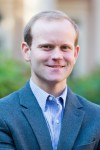 Fuller’s dissertation titled, “Words, Wounds, and Relationships: a Mixed-Method Study of Free Speech and Harm in High-Conflict Environments,” uses qualitative field methods to examine high-conflict political protests, such as abortion clinic protests, where free speech is truly tested. Fuller’s ethnographic field project highlights core First Amendment doctrines such as true threats and incitement and how they are applied by federal courts. Instead of purported threats, harassment, and violence, Fuller’s research revealed a complex web of social relationships at the clinics, largely influenced by how different stakeholders interpreted speech in these high-conflict environments. His work was designed to help inform courts as these harmful speech doctrines develop. UNC Media and Journalism School faculty Dr. Michael Hoefges and Dr. Tori Smith Ekstrand also served on Fuller’s committee, as well as Dr. George Noblit from the UNC Department of Sociology and Professor Bill Marshall from the UNC School of Law.
 Fourth-year Ph.D .student and Park Fellow Kriste Patrow won the First Place Student Paper Award from the Media Law and Policy Division of AEJMC for her paper, “‘Walk’ This Way, Talk This Way: How Do We Know When the Government is Speaking After Walker v. Texas?” Patrow’s paper examines confusion surrounding the government speech doctrine. She analyzed six U.S. Supreme Court cases in which the Court was tasked with determining when a reasonable person would understand a message to be from the government. The analysis revealed ways to anchor the reasonable observer prong of the test, by requiring that there be a main cognizable message and that the government self-identify as speaker.
 Fourth-year Ph.D. student Shao Chengyuan received the First Place Student Paper Award from the Mass Communication and Society Division of AEJMC. Her paper, “Asian International Students’ Mass Media Use and Acculturation Strategies,” highlights the important role of mass media use before students relocate. The paper also examines students’ cultural knowledge of American society. The paper is co-authored with doctoral student Lin Li from Michigan State University’s Department of Media and Information.
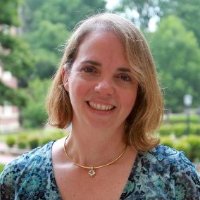
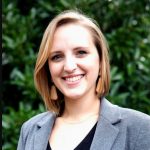 Third-year PhD student and Park Fellow Kyla Garrett Wagner was awarded UNC’s 2018 Student Excellence in Mentoring Award. The award recognizes graduate and professional students who engage in outstanding peer mentorship across campus. Wagner is an interdisciplinary student who studies sexual expression as a free speech and public health issue. She recently served as first author on a study about citizen support for a California law requiring adult film actors to wear condoms. The article titled, “
 MA/JD student and Pruden Fellow Mariam Turner was recently offered a legal internship at National Public Radio (“NPR”). Mariam will spend the summer at NPR’s office in Washington, D.C. where she will work on audio licensing and copyright issues for NPR’s general counsel.
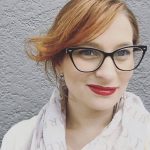 MA/JD student and Park Fellow Lindsie Trego, our resident expert on student expression, has accepted a legal fellowship with the