Michael Hoefges Scholarship Continues to Support the Next Generation of Media Law Scholars

The Michael Hoefges Scholarship honors the life and legacy of Dr. Michael Hoefges, a respected media law scholar, teacher, and mentor whose work shaped generations of students at the UNC Hussman School of Journalism and Media.

Dr. Hoefges joined the UNC faculty in 2003, where he taught undergraduate and graduate media law courses and helped build the M.A./ J.D. and Ph.D./ J.D. dual degree programs. He was the founding co-coordinator of that program and served as an adviser to students pursuing both journalism and law.

Dr. Hoefges passed away on March 9, 2021, after a long battle with cancer, but his influence remains deeply felt by former students, colleagues, and the wider media law community. His research focused on First Amendment commercial and corporate speech, advertising and marketing regulation, access to government records, and freedom of information law. Before entering academia, he practiced as a civil litigation defense attorney in Florida and later taught media law at Trinity University, the University of Tennessee, and then UNC Chapel Hill.

The Michael Hoefges Scholarship was created to honor Dr. Hoefges’ lasting impact at the UNC Hussman School of Journalism and Media and to support students whose academic and professional interests reflect the areas he cared about most. 

While the exact amount may vary from year to year depending on available funding and annual award decisions, the scholarship provides meaningful financial support to Hussman students as they continue their research, studies, and professional development. 

Past recipients of the Michael Hoefges Scholarship reflect the wide range of work being done by students and alumni connected to the fields of media law, journalism, communication policy, technology, and public life. 

Past recipients include:

2022 & 2023

Evan Ringel 

J.D., M.A. and Ph.D. in Media and Communication

Dr. Evan Ringel is an Assistant Professor of Media Law at Appalachian State University. His research explores the First Amendment, emerging technologies, civil rights, and state level regulation. He earned his J.D., M.A. and Ph.D. from the University of North Carolina at Chapel Hill through the UNC School of Law and the Hussman School of Journalism and Media. Dr. Ringel has also worked closely with the UNC Center for Media Law and Policy and has published research on election related speech and facial recognition technology. 

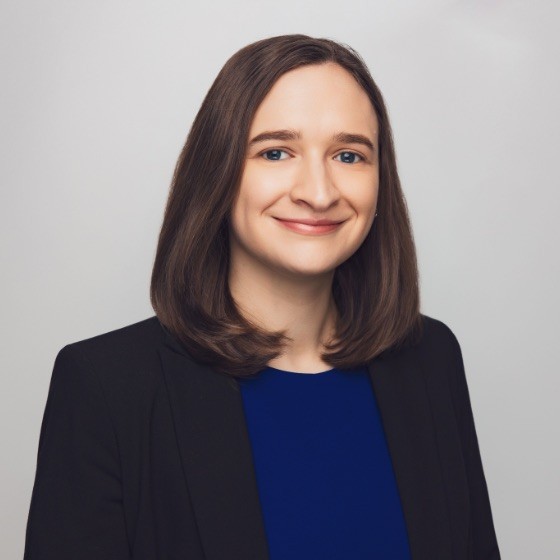
Noelle Wilson

J.D./M.A. Dual Degree

Noelle Wilson is now an associate attorney at Goodwin. Her interests center on issues at the intersection of law and communication technology. During law school, she served as an editor on the North Carolina Law Review and as an Honors Writing Scholar. She also gained legal experience through internships with the United States Department of Justice, Civil Division, Consumer Protection Branch, the Federal Communications Commission, and the United States District Court for the Western District of North Carolina. 

2024

Jessica Shaw

Ph.D. in Media and Communication

Dr. Jessica Shaw is an Assistant Professor in the Department of Advertising and Public Relations at Temple University’s Klein College of Media and Communication. She earned her Ph.D. in Media and Communication from UNC Chapel Hill in 2025. Dr. Shaw’s teaching and research are shaped by her background in journalism, public relations, nonprofit, and government communication. Her scholarship examines public understanding, responsibility, media ethics, privacy fatigue, and regulatory communication around data protection.

2025

Skylar Bandoly

Skylar Bandoly is a first year Ph.D. student at the Hussman School of Journalism and Media at UNC Chapel Hill. Her journalism background includes work at The Wall Street Journal, CNN, Georgia Public Broadcasting, and Scripps. Bandoly has also taught as a journalism adjunct instructor at the University of Georgia, connecting her newsroom experience with her work as an educator and scholar. Her research interests center on media law, press freedom, and legal protections for journalists.


Together, the recipients reflect the purpose of the scholarship: to support students whose work carries forward Dr. Hoefges’ commitment to scholarship, teaching, and public service. By supporting students at Hussman, the award keeps his influence alive in the classrooms, research projects, and careers of those following in his footsteps.

2025 Cleary Writing Competition Winners Announced

The UNC Center for Media Law and Policy is pleased to announce the winners of the annual James R. Cleary Prize for the best student-published scholarly articles on media law and policy.

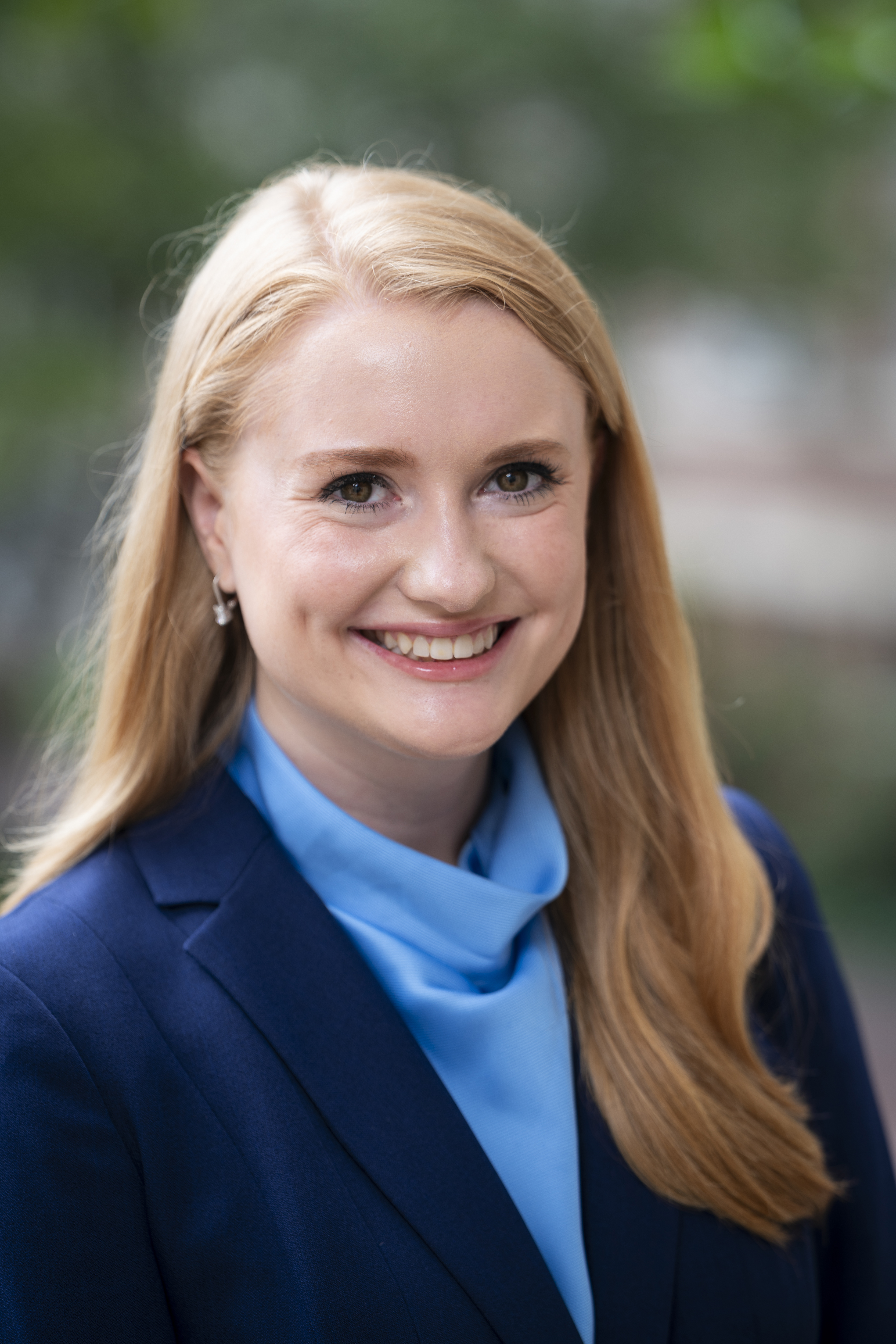
Anne Sutton OrndorffThis year’s first-place winner is Anne (Sutton) Orndorff for her article titled “A Woman’s Right to Know, But Not to Choose: Revisiting HB854 in the Wake of Dobbs and NIFLA.” The award comes with a $1,000 cash prize.

Sutton’s Note examines abortion informed-consent laws, focusing on North Carolina’s HB854 and the Fourth Circuit’s decision in Stuart v. Camnitz. She argues that abortion “informed consent” has increasingly been used as a tool of ideological pressure rather than genuine patient education. The piece traces the doctrinal history from City of Akron, Thornburgh, and Casey through Rounds and Lakey, then contrasts those cases with Stuart, which treated the law as compelled speech and applied intermediate scrutiny. The Note’s central claim is that NIFLA and Dobbs undermine the Fifth and Eighth Circuits’ reliance on Casey and make a fresh First Amendment analysis necessary. It concludes that many abortion “informed consent” laws are not true informed-consent regulations at all and should be vulnerable under the First Amendment.

Sutton is a graduating third-year student from the University of North Carolina School of Law. Originally from Charlotte, North Carolina, she attended the University of Richmond where she majored in History and minored in Latin American, Latino & Iberian studies. During her time at Richmond, she also served as a captain of the Division I field hockey team. At Carolina Law, she served as president of the Carolina Law Ambassadors and a Note Editor for the First Amendment Law Review. After graduation, she will join a commercial real estate firm in Raleigh.


Owen Breen Headshot

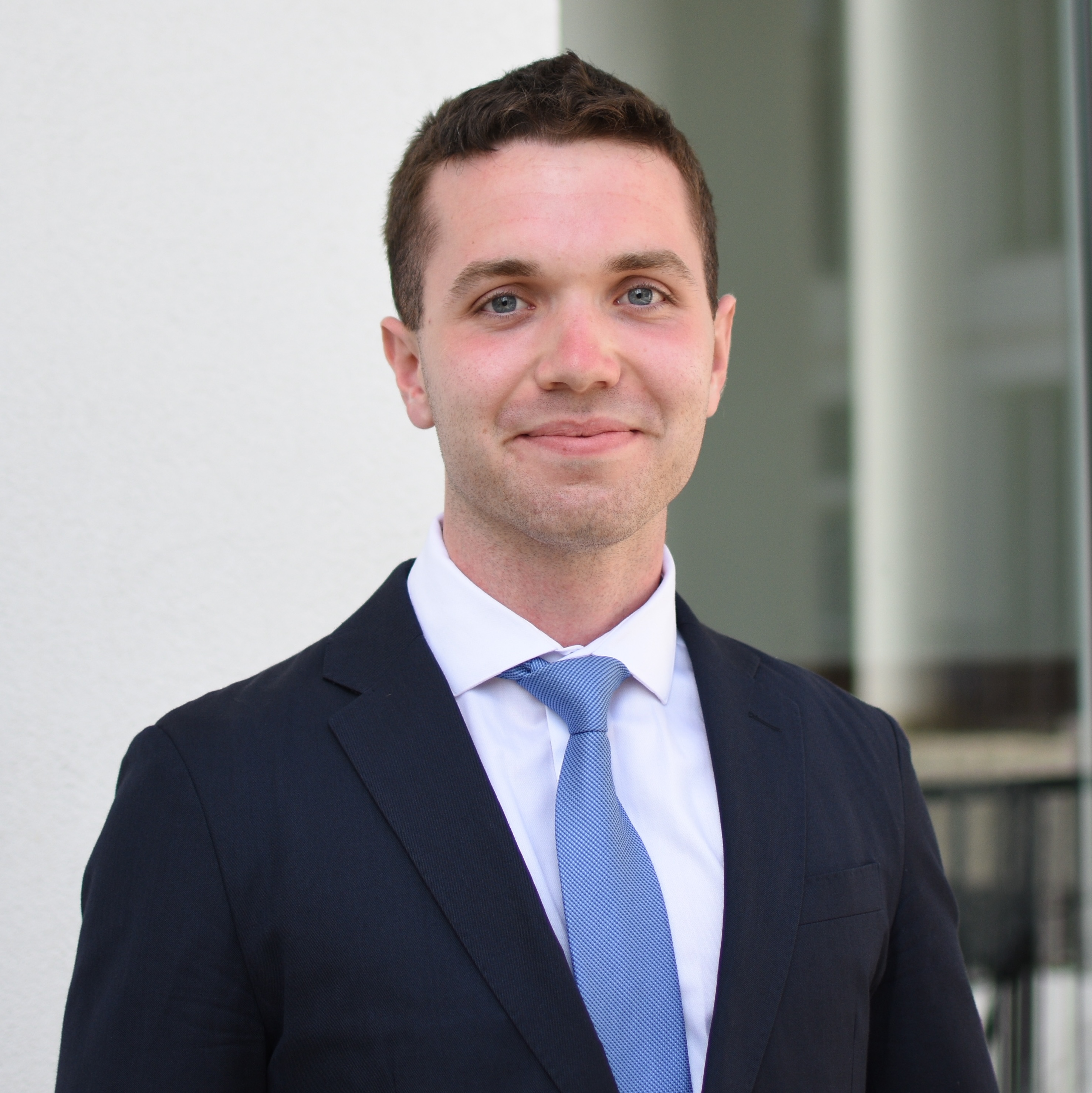
This year’s second-place winner is Owen Breen for his article titled “Lights, Camera, Arrest! Sharpe v. Winterville Police Department Represents a Novel Collision of Law Enforcement Priorities and the First Amendment.” The award comes with a $500 cash prize.

Owen’s Note analyzes Sharpe v. Winterville Police Department, a Fourth Circuit case involving a passenger who attempted to livestream a traffic stop. He frames the case as a conflict between the public’s First Amendment interest in recording police and law enforcement’s interest in officer safety during traffic stops. The piece surveys the broader right-to-record jurisprudence, including Glik, Gericke, Fields, Project Veritas, and Irizarry, and discusses how time, place, and manner limits and obstruction statutes shape the doctrine. It also explores the Fourth Amendment implications of traffic stops and argues that livestreaming during an active stop may create unique safety risks that justify some limits. The Note ultimately takes a more skeptical view of expansive recording rights in this context, especially where livestreaming may interfere with police duties.

Owen is a 2026 graduate of the University of North Carolina School of Law. Born and raised in the suburbs of Philadelphia, Pennsylvania, he now lives in Wilmington, North Carolina. Previously, he graduated from Emory University’s Goizueta Business School in 2023 with a Bachelor of Business Administration degree and a double major in Political Science. While at Carolina Law, he was a staff writer on the First Amendment Law Review. Owen is passionate about First Amendment issues, politics, and current affairs. He will join Phelps Dunbar as an Associate Attorney in its Raleigh office in the fall.

2026 Hargrove Colloquium–The Regulator’s Dilemma: Innovation and Global Competition

On April 6, the UNC Center for Media Law and Policy will host the 2026 Hargrove Media Law and Policy Colloquium, featuring Kevin Martin, vice president and head of global policy at Meta and former chairman of the Federal Communications Commission. Titled The Regulator’s Dilemma: Innovation and Global Competition, the event will explore how regulators and industry leaders can respond to rapid technological change while fostering innovation and maintaining competitiveness in an increasingly global media and communications marketplace.

Mr. Martin brings a rare combination of senior government, private practice, and global policy experience to this conversation. He served two terms as commissioner and chairman of the FCC during a period of significant transformation in telecommunications, broadband, and media regulation. Before joining the FCC, he worked at the White House as a Special Assistant to the President for Economic Policy and as a member of the National Economic Council staff, where he focused on commerce and technology policy. He also represented the United States on the G‑8 Digital Opportunity Task Force, addressing how the digital revolution could expand opportunity in developing countries. After leaving government service, Mr. Martin was a partner and co-chair of the telecommunications practice at an international law firm before joining Meta, where he now leads global engagement with policymakers on privacy, connectivity, trade, and related issues.

In addition to delivering prepared remarks, Mr. Martin will sit down for a conversation with Julia Ambrose, who clerked for Associate Justice Sandra Day O’Connor and now leads the media law practice at Brooks, Pierce, McLendon, Humphrey & Leonard, LLP. Their discussion will examine the practical and philosophical tensions between regulation and innovation, the growing importance of international policy considerations, and the role lawyers play in advising clients amid regulatory uncertainty and global competition.

Designed for lawyers, media and technology industry leaders, policymakers, and students, the evening will offer a thoughtful and timely examination of the regulatory choices shaping the future of media and communications. The event will also highlight the enduring relevance of media law and policy education at a moment when regulatory decisions increasingly influence innovation, democratic values, and economic growth worldwide.

The colloquium will take place on April 6 at 7:00 p.m. at the Paul J. Rizzo Conference Center, 130 DuBose Home Lane, Chapel Hill, NC 27517. The event is free and open to the public, though advance registration is encouraged due to limited seating. Registration is available here.

For more information on the Colloquium, please visit our event page.

0

The James R. Cleary Prize for Student Media Law and Policy Research in 2025

The UNC Center for Media Law and Policy is now accepting submissions for the James R. Cleary Prize for student media law and policy research published in 2025. The annual award competition, which highlights the best student-authored scholarly articles on media law and policy-related topics, honors the legacy of James R. Cleary, an attorney who practiced for 56 years in Huntsville, Ala.  He was particularly interested in the communications field and media law issues.  Cleary’s daughter, Johanna Cleary, is a 2004 Ph.D. graduate of the UNC Hussman School of Journalism and Media.

The prize competition is open to all college and university students. Up to three winners will be selected, with a first prize of $1,000, a second prize of $500, and a third prize of $250. The prizes will be awarded to the authors of published papers that most creatively and convincingly propose solutions to significant problems in the field of media law and policy.  We define this subject matter broadly, including copyright, trademark, social media regulation, and First Amendment speech and press issues. All methodologies are welcome.

The deadline for submission is April 30, 2026.

Rules

  1. The author of the submitted publication must have been enrolled in a graduate or undergraduate degree-granting program in the United States at the time the article was accepted for publication. This includes, but is not limited to, students enrolled in M.A. and Ph.D. programs, law school (including J.D., LL.M., and J.S.D. candidates), and other professional schools (including M.B.A. candidates).
  2. The submitted paper must have been published in a law review or peer-reviewed journal during the 2025 calendar year.
  3. Each student may submit only one entry.
  4. Jointly authored papers are eligible, provided all authors meet the eligibility requirements for the competition. If a winning paper has more than one author, the prize will be split equally among the co-authors. No work with a faculty co-author will be considered.
  5. Each entry must be the original work of the listed author(s). The author(s) must perform all of the key tasks of identifying the topic, researching it, analyzing it, formulating positions and arguments, and writing and revising the paper.
  6. Papers will be evaluated based on a number of factors, including thoroughness of research and analysis, relevance to the competition topic, relevance to current legal and/ or public policy debates, originality of thought, and clarity of expression.
  7. The prize will be monetary. Winners will be required to submit a completed W-9, affidavit of eligibility, tax acknowledgment, and liability release for tax purposes as a condition of receiving the cash prize.
  8. In the unlikely event that entries are of insufficient quality to merit an award, the Center for Media Law and Policy reserves the right not to award some or all of the prizes.

Submission Process

  • All entries must be received by 11:59 p.m. EST on April 30, 2026.
  • Entries must be sent via email to medialaw[at]unc.edu with the following in the subject line: “James R. Cleary Prize Submission: [Name of Author]”
  • Papers should be submitted in Portable Document Format (.pdf).
  • Entries MUST include a signed cover sheet that may be downloaded from the Center for Media Law Policy’s website here.

A review committee comprised of faculty and affiliates from the UNC Center for Media Law and Policy will review the submissions and determine the winning paper(s). The decisions of the committee are final. Winners will be notified and final results will appear on the Center’s website in late spring. Due to the large number of expected entries, the Center cannot contact all non-winning entrants.

For more information, please visit our Cleary Competition page.

0

Article: The Mathematics of Regulatory Fragmentation

This study explores the rapidly evolving landscape of state-level digital platform regulation in the United States and uncovers a surprising mathematical dimension to how overlapping laws impact technology design, compliance costs, and market dynamics.

MATHEMATICS OF REGULATORY FRAGMENTATION

🔍 What the Research Explores

State governments have introduced a patchwork of social media safety laws that impose technical mandates on online platforms — especially aimed at enhancing user protections such as youth safety. While well-intentioned, these regulations do not simply add compliance costs as jurisdictions pile on more rules. Instead:

  • Each new state requirement interacts with every other, creating multiplicative — not additive — technical burdens for platforms.

  • This exponential growth in complexity stems from a combinatorial reality: as more distinct regulations are introduced, the number of potential conflicts and design constraints multiplies rapidly.

  • Smaller platforms and new market entrants are particularly disadvantaged, as they face disproportionately high engineering and operational costs to satisfy conflicting rules across jurisdictions.

  • Ironically, regulatory fragmentation may also undermine the very safeguards these laws are meant to provide, by incentivizing workarounds and fragmenting the user experience.

📌 Why It Matters

This research highlights a critical, often overlooked dimension of digital policy: the interactions between laws matter just as much as the content of the laws themselves. By applying mathematical reasoning to regulation, this work provides policymakers, researchers, and technologists with a new lens for assessing the real-world effects of decentralized digital governance.

The paper contributes to debates on platform regulation, digital governance, and the economics of compliance: topics that are central to recent legislative efforts across the U.S. and around the world.

📥 Read the Paper

The full paper (58 pages) is available on SSRN.

0