
The D.C. Circuit today held that the Federal Communications Commission’s network neutrality nondiscrimination rules were invalid because the FCC lacked the authority to regulate how Internet providers treat content. The “Open Internet” rules, passed in 2010, required ISPs to treat all Internet content equally. Under the rules, a provider such as Verizon could not block or slow down certain Internet content or allow companies to pay for their content to be delivered faster. The Court said that the FCC can only impose such regulations on common carriers, such as telephone companies, and that ISPs are not common carriers. Read the opinion here.
New Center Video Gallery Launched
Since 2009, the Center has been holding a variety of events and workshops. Whenever possible, we live-stream and make archive video available on each event’s individual page. To make it easier to find these videos, we have compiled all of our event videos into a gallery so our community of users can easily browse and view footage of the diverse programs that we offer. It is our goal that this collection, which includes public addresses by scholars like Harvard Professor Lawrence Lessig, media executives like NBC News President Ben Sherwood, and public officials like former FCC Commissioner Michael Copps, will inspire lively discussions amongst those interested in the relationships between communication and government policy. We encourage you to check out the gallery and welcome your feedback.
Free Speech Assumptions and the Case of Netflix

From left to right: Haben Girma, Harvard Law graduate; Elizabeth Ekstrand, daughter of the author; Victoria Ekstrand, UNC asst. professor; and Katie Savage, president of Advocates for Carolina.
There are two (among many) huge assumptions we make when we speak of a right to free speech or free expression.
The first assumption is that such speech can actually be formed.
The second is that such speech will be heard.
For the disabled, neither assumption is a given. The disabled who can speak are often not heard. Their voices are either lost in a crowded marketplace focused on elite influencers or their speech is lacking or misunderstood because of the nature of their disability.
How then do we conceptualize a right of free speech for the disabled? Can we think about the Americans with Disabilities Act (ADA) in connection with a right of free expression? Do we have any case law that might lead us to consider such a connection? (The short answer to this last question, I think, is “yes.” More on that below.)
Haben Girma, the first deaf/blind student to graduate from Harvard Law School, had me reflecting on these questions during her visit last month to UNC. Haben, who was invited by Advocates for Carolina, a student group formed to reflect on life for the disabled on the UNC campus, spoke about her disability and her story to WUNC and to more than 100 students gathered in the Student Union. She now spends her days as a Skadden Fellow at Disability Rights Advocates in San Francisco, where she works to increase the accessibility of digital instructional materials at colleges and universities.
Like others who have struggled to make a life for themselves amidst an able-bodied culture, Haben refused to allow society to shut her out. She has spent her young life problem-solving around a profound inability to engage in the marketplace of ideas as seamlessly as the rest of us do. While certainly no law has directly infringed Haben’s right to free speech, it is very clear that her speech experience has been profoundly different than the experiences of most U.S. citizens.
That raises the question of government responsibility: What is the state’s role, if any, in assuring access to the marketplace of ideas for those whose access is impaired by a physical and/or mental limitation? And how can digital and online media technologies contribute to that access?
It’s a question I’m interested in thinking more about after Haben’s visit and in the wake of a settlement last year between Netflix and the National Association of the Deaf. The Netflix case revolved around the movie service’s “Watch Instantly” on-demand service, which failed to provide closed captioning on all content. The case ended with a consent decree that mandated Netflix provide captions on all streamed programming by 2014.
Federal District Court Judge Michael Ponsor rejected Netflix’s argument that the American with Disabilities Act (ADA) did not require Internet Service Providers and other digital media providers to make accommodations:
“In a society in which business is increasingly conducted online, excluding businesses that sell services through the Internet from the ADA would run afoul of the purposes of the ADA and would severely frustrate Congress’s intent that individuals with disabilities fully enjoy the goods, services, privileges and advantages, available indiscriminately to other members of the general public.”
In other words, the Internet’s marketplace of ideas must and should be accessible to the disabled. This expanded view of the ADA bears watching for its First Amendment implications going forward. In the meantime, I’ll be sending the link to this post to Haben, hoping that she will post a response below.
Supreme Court won’t hear challenge to NSA surveillance
The Supreme Court Friday declined to consider the legality of the National Security Agency’s collection of Verizon customers’ phone call records.
The Court declined without comment to decide whether the Foreign Intelligence Surveillance Court exceeded its jurisdiction when it issued orders to Verizon to turn over the records of all phone calls made wholly within the United States or between the United States and abroad.
The challenge came from the Electronic Privacy Information Center, which asked the Court for a “writ of mandamus,” a process by which the Supreme Court directly reviews a case that has not been appealed through lower courts. A writ of mandamus is only proper when the plaintiff has no other adequate means of obtaining relief. In this case, EPIC argued that it could not pursue relief in lower district and appellate courts because those courts have no jurisdiction over the FISC, and that only the government or the recipient of a FISC order can appeal that order to the Foreign Intelligence Surveillance Court of Review.
In its response, the Justice Department argued that EPIC must file its challenge in federal district court as other plaintiffs have done. However, the government didn’t concede that EPIC would be a proper party to challenge the FISC order in district court — only that EPIC could not seek relief from the Supreme Court that it could not obtain in district court. SCOTUSblog reported that “the government has attempted to thwart court review of challenges…already filed [in lower court].”
The Justice Department also argued that EPIC did not show that the NSA had reviewed phone records relating to EPIC’s members, “particularly given the stringent, FISC-imposed restrictions that limit access to the database to counterterrorism purposes.” No court has ruled on this issue, and it could come up again in the district court challenges to the NSA’s phone records collection program.
A federal court has yet to rule on the legality of the NSA’s domestic surveillance program since a series of leaks in June revealed that the NSA had been collecting Americans’ phone call records for at least seven years.
Natasha Duarte is a 2L at the University of North Carolina School of Law and a first-year master’s student at the UNC School of Journalism and Mass Communication.
New FCC Chair to Industry: Unlock Customers’ Phones
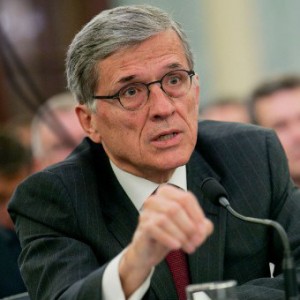 The back-and-forth over regulation of wireless phones continues this week. New FCC Chairman Tom Wheeler asked the CTIA Wireless Association to recommend that its members, including AT&T, Verizon and other carriers, voluntarily allow consumers to “unlock” their wireless phones “when the applicable service contract, installment plan, or ETF [early termination fee] has been fulfilled” (Note that this would not help in-contract customers who want to unlock their phones for the purposes of using foreign carriers during international travel). He implied that he would push for FCC regulations forcing carriers to allow unlocking if the practice was not adopted voluntarily by the mobile phone industry.
This continues a decade of confusion for customers of U.S. carriers. In 2006, the Librarian of Congress, tasked every three years by the Digital Millennium Copyright Act (DMCA) to consider exemptions to anticircumvention rules, created an exemption allowing mobile phone owners to modify their phones “for the sole purpose of lawfully connecting to a wireless telephone communication network.” In 2007, hacker George Hotz successfully modified his Apple iPhone to connect to networks other than AT&T, which at the time was the only wireless carrier offering the iPhone. Apple, unable to sue Hotz due to the DMCA exemption, attempted to counter Hotz’s modifications by both sending out software updates that removed the exploited security flaws and threatening to void the warranties of modified phones. In 2012, the new Librarian of Congress declined to renew its exemption, making it illegal for consumers to unlock their phones. It is this 2012 prohibition by the Librarian of Congress that Chairman Wheeler opposes.
If the mobile phone industry does not self-regulate, it’s unclear how an FCC ruling in support of unlocking phones would play out, given that the DMCA authorizes the Librarian of Congress, not the FCC, to dictate exemptions to the Act’s anticircumvention rules. The Obama administration, responding to the Librarian’s prohibition, implied that Congress or the FCC should act to make phone unlocking legal again, implying that it would support the FCC in such a decision.