
Second Annual Aspiring Free Speech Scholars Workshop
jointly sponsored by the Sandra Day O’Connor College of Law (ASU)
and the Hoover Institution (Stanford University)
Because of a technical problem, any submissions before June 4, 2026 were lost; please resubmit (or submit for the first time) at the new URL listed below, https://tinyurl.com/aspiring-free-speech-scholars
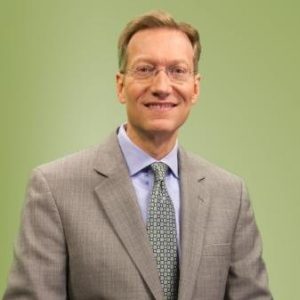
Posted on behalf of Eugene Volokh and James Weinstein:
Are you a law student, judicial law clerk, lawyer, or beginning academic hoping to publish a journal article on free speech law? Would you like the opportunity to get advice about your draft from leading free speech scholars?
If so, send us your draft by Sunday, August 16, 2026. (This should still be a draft article, not an article that’s already published or expected to be published within six months.) We plan to select the submissions that we think are particularly promising, and invite their authors to a workshop where they can present their papers and get helpful feedback on them. The workshop will be Saturday, October 24, 2026 (with dinner the night before) at the Sandra Day O’Connor College of Law in Phoenix, and we will inform the selected authors by Tuesday, September 8, 2026.
We have funds to pay for transportation and lodging for the selected authors’ trips. Eligibility is limited to people who have so far published three or fewer law-related journal articles.
We also plan to officially recognize zero to three of the top articles among those we review. If the authors wish, they can also have their articles reviewed for publication in the Journal of Free Speech Law (http://JournalOfFreeSpeechLaw.org), presumably after they revise the articles in light of the workshop feedback.
If you’re interested, please submit your draft at https://tinyurl.com/aspiring-free-speech-scholars (Google logon required). Please single-space, and format the article nicely, so we can more easily read it.
Please do not include your name or law school affiliation in the document or document filename, and please do not include an author’s note thanking your advisors and others. Please make your filename be the title of your article (or some recognizable subset of the article title). We want to review the article drafts without knowing the authors’ identities.
If you have questions, please check http://tinyurl.com/aspiring-free-speech-faq; if your question isn’t answered there, please e-mail volokh@stanford.edu.
Many thanks to the Stanton Foundation for its generous support.
* * *
James Weinstein, Dan Cracchiolo Chair in Constitutional Law and Professor of Law, Sandra Day O’Connor College of Law, Arizona State University
Eugene Volokh, Thomas M. Siebel Senior Fellow, Hoover Institution (Stanford University), and Gary T. Schwartz Distinguished Professor of Law Emeritus, UCLA School of Law
 On April 6, the