Archive | Internet

Twitter and Nielsen Ratings Team Up to Track Viewership

4156535452_9f2ee39b7e_bTwitter is teaming up with Nielsen Ratings to aid the service in monitoring what television shows are most frequently tweeted about by its users. The novel approach, called a “unique audience,” makes it easier than ever for the Nielsen system to provide accurate information about television viewership numbers on any given night.

The new system allows Nielsen Ratings to track how many tweets are sent, what television show those tweets reference, who those tweets are seen by, and how many times those tweets are seen. With 200 million Twitter users, the data will be a powerful tool for advertisers looking to broadcast during commercial breaks of the most-viewed television programs.

The “unique audience” information gained from Twitter will also help Nielsen track what has traditionally been extremely difficult to measure: the spoken word. In Twitter’s case, it’s easy to capture what millions of Americans are watching through the data trail left behind. By allowing Nielsen to create a rating system based on tweets, Twitter is opening up access to that once impossible-to-track information.

The ratings system provides more information about viewership than ever before by monitoring conversations — not by the spoken word — but by the typed tweet.

Samantha Scheller is a 2L at UNC Law.

(Image courtesy of Flickr user flash.pro pursuant to a Creative Commons CC BY 2.0 license.)

0

A UNC Student’s Summer Experience at the Berkman Center’s Digital Media Law Project

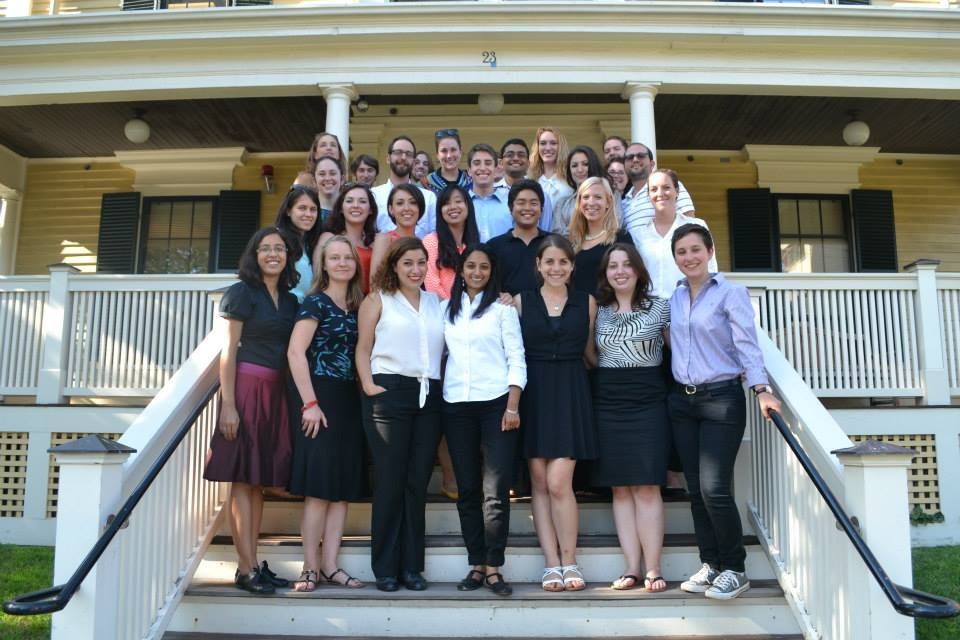
IMG_4639This summer, I was fortunate enough to intern for the Digital Media Law Project (DMLP) at the Berkman Center in Cambridge, MA. Our office facility — fondly referred to as the “big yellow house” — was home to a large number of Berkman Center projects, of which the DMLP was one.

The Berkman Center is a wonderful place to work, as the house is constantly filled to the brim with scholars in a variety of fields. It seemed that wherever you went, from the front porch to the kitchen, you were welcomed in eavesdropping on a conversation about an interesting new research project or developing body of law. Berkman also houses a number of fascinating software development projects.

My day-to-day life as a DMLP intern was filled with media law — a complex world of legal issues like defamation, copyright, trademark, anti-SLAPP motions, Section 230 of the Communication Decency Act, DMCA takedown notices, shield laws for reporters, first amendment issues, and more.

I worked on a number of projects for the DMLP throughout the summer. In my legal threat research, my supervisors, Jeff Hermes and Andy Sellars, encouraged me to delve into complex litigation procedures while analyzing court documents for recent media law cases. Through this research, I gained an understanding of how pervasive media law issues are in our court system and in our lives.

On another project, I researched and wrote detailed legal guides on issues such as how to form a journalism cooperative in Pennsylvania and how to operate under Tennessee’s recording laws. The legal guide work is essential for reporters and citizen journalists who need to understand in non-legalese the legal implications of publishing within their state.
IMG_4737Finally, every two weeks, I was encouraged to develop a blog post on my topic of choice. The DMLP blogs provided me the freedom to delve into specific areas of media law including a patent on podcasts, the federal shield law, and how journalist organizations are using Instagram.

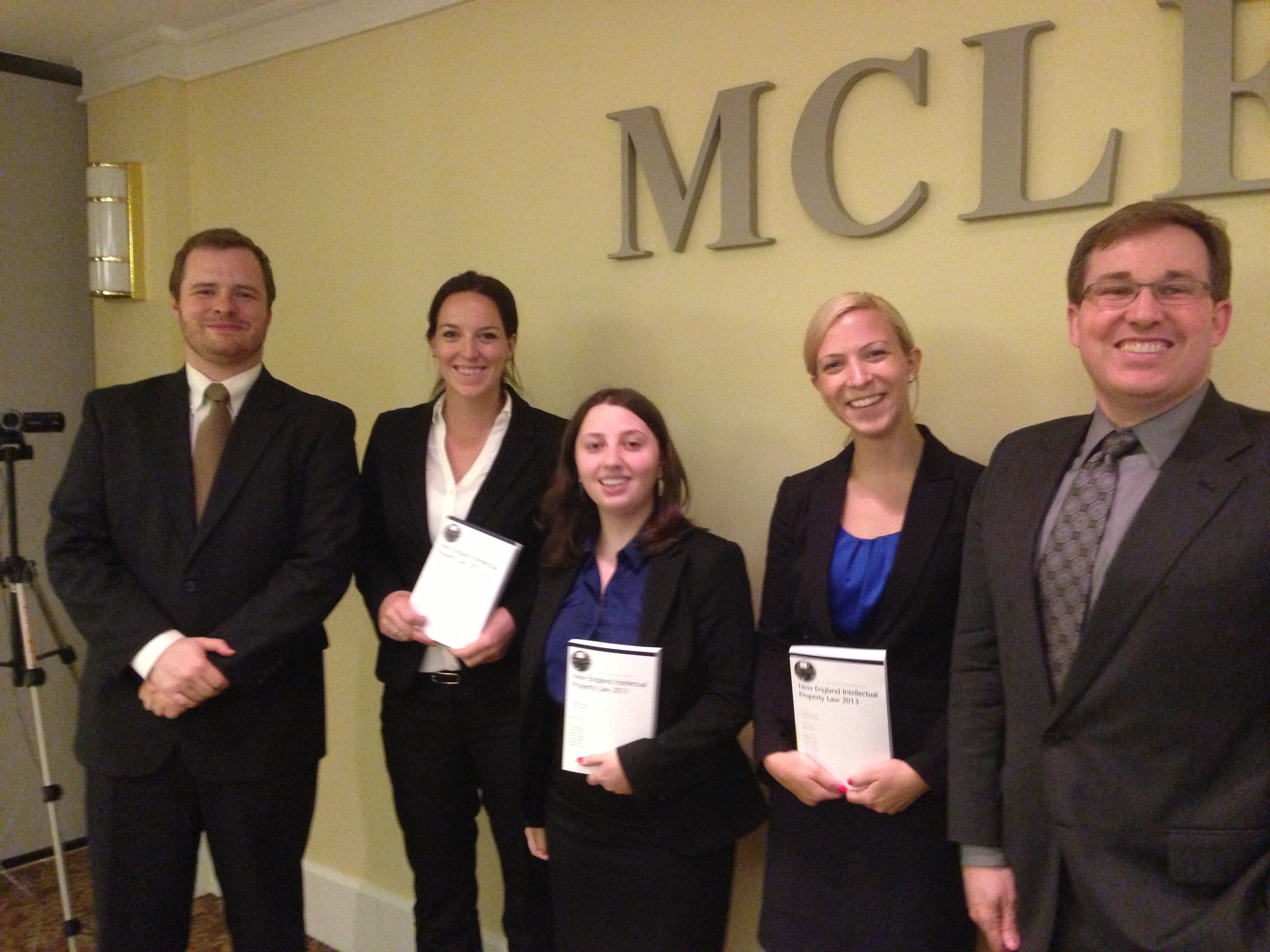
My research at the DMLP wasn’t all that Berkman had to offer. One week, my supervisors, my fellow DMLP interns, and I were invited to attend a Massachusetts Continuing Legal Education course at which our supervisor, Jeff Hermes, was presenting. This experience was certainly one of the highlights of my summer as I was able to hear first-hand about the most recent issues and case law in this field.

Each week, my fellow “Berkterns” and I were invited to attend lunchtime and afternoon seminars on a variety of topics, legal and otherwise, given by scholars at the top of their fields. These presentations were followed by intellectually stimulating discussions which often challenged me to consider new ideas and viewpoints. (Another summer highlight: at one such lunchtime presentation, representatives from Google Glass came by and let us try on Glass(es)! The demo led to a great discussion about the legal, social, and privacy implications of the new technology.)

IMG_6199I would highly recommend an internship at the Digital Media Law Project to anyone interested in studying recent media law cases and understanding the protections needed to prevent chilling effects. I made great friends, had a wonderful time traveling around Boston and Cambridge, and embraced everything the area had to offer. Through the DMLP’s collaborative work environment, I was able to learn so much about media law and witness first-hand how this relatively new area of law is influencing a wide range of people across the country.


0

NPR and AP Limit Use of “Obamacare” Language

obamacare-logo_fullAs the government shutdown continues, National Public Radio (NPR) and the Associated Press (AP) have decided to cut back on their usage of the term “Obamacare.”

NPR’s managing editor, Stuart Seidel, issued the editing order last Tuesday, asking that NPR staff members vary their wording when discussing the new health care system, saying that the politically divisive term was no longer neutral.

Meanwhile, the AP is also limiting its use of the term “Obamacare” as well as declining to refer to the health care law as the “Affordable Care Act.” The AP’s deputy managing editor and standards editor, Tom Kent, says the phrase is inherently promotional by its use of the word “affordable.” Alternatively, the AP plans to refer to the act as the “health care overhaul,” “the nation’s new health insurance system,” or simply “the new health care law.”

Such a shift in wording by two of the nation’s largest news outlets may aid Americans who remain unclear about the lack of distinction between Obamacare and the Affordable Care Act, as exhibited on a recent Jimmy Kimmel Live! show segment.

Samantha Scheller is a 2L at the University of North Carolina School of Law.

0

Government Shutdown Affects FOIA Requests

nsaThe government shutdown is having an impact on every “nonessential” federal service, including Freedom of Information Act (FOIA) and Privacy Act (PA) requests under the NSA.

According to the NSA’s website, all FOIA and PA requests or inquiries submitted to the FOIA/PA office “will not be addressed until the office reopens.” The NSA’s homepage also cites the government shutdown as responsible for its inability to update the NSA website.

Many of the NSA’s other programs will continue to operate during the government shutdown. In a memo released last Friday from the Department of Defense,  the Deputy Secretary said that while a “large number of [] civilian employees [will] be temporarily furloughed[,]” the shutdown will not affect military personnel who will “continue in a normal duty status.”

Samantha Scheller is a 2L at the University of North Carolina School of Law.

0

Judge: Google may have illegally wiretapped its users’ email

Google may have violated the federal Wiretap Act when it routinely scanned the content of emails for purposes of providing targeted advertising and creating user profiles, a federal judge ruled yesterday.

The Northern District of California denied Google’s motion to dismiss the Wiretap Act claims against it, allowing the case to go forward. The court found that Google’s practices were not “instrumental” to providing email services through Gmail and that email users may not have consented to having their emails read for advertising and user profile purposes.

The outcome of this case could have ramifications for all email services that intercept and “read” or “scan” users’ emails for key words which are used to attach targeted ads to emails.

The Wiretap Act and the “ordinary course of business” exception

The federal Wiretap Act prohibits the interception of wire, oral, or electronic communications. The Act contains an exception for communications intercepted by a provider of electronic communication service in the “ordinary course of its business.” The court held that Google’s interception of emails to and from Gmail users for advertising and user profile building purposes did not fall under this exception.

The court narrowly defined the “ordinary course of business” exception as applying to email providers only when the interception “facilitates or is incidental to” providing email services. Since Google’s interception of email for advertising and profile building purposes is separate from its spam filtering, antivirus protections, spell checking, and other scanning functions, the Court held that the interception was not “instrumental” to providing email services.

Did Gmail users consent to Google reading their emails?

Google argued that Gmail users, by agreeing to Google’s Terms of Service and Privacy Policies, consented to any interception of emails by Google. But after reviewing the policies, the court could not “conclude that any party…consented to Google’s reading of email for purposes of creating user profiles or providing targeted advertising.”

The judge found that no version of Google’s Terms of Service or Privacy Policies explicitly said that Google would intercept and read the content of users’ emails.

Google’s Terms of Service from April 2007 to March 2012 stated that “Google reserves the right…to pre-screen, review, flag, filter, modify, refuse or remove any or all Content from any Service.” A separate section stated that “advertisements may be targeted to the content of information stored on the Services, queries made through the Services or other information.” Google’s Privacy Policies from August 2008 to March 2012 stated that Google may collect “information you provide, cookies, log information, user communications to Google, affiliated sites, links, and other sites.”

The district judge found that none of these terms specifically mentioned the content of users’ emails to each other or gave users notice that their emails were intercepted to create user profiles. Moreover, the assertion that Google “could” target advertisements based on content stored in Gmail did not provide notice that it “would,” and intercepting information in transit — the specific prohibition of the Wiretap Act — is not the same as collecting “stored” content, the Judge wrote.

What’s next?

Google can ask the district court judge to grant it permission to appeal the decision to the Ninth Circuit. In the mean time, it remains uncertain whether email services can legally scan the content of users’ emails to provide targeted advertising and what constitutes consent for doing so.

In 2012, Google introduced a new privacy policy across all of its services, including Gmail. Although it lists multiple types of information that Google may collect and use, it still does not explicitly list email content. No court has ruled on whether agreeing to this policy constitutes consent or notice for Google to intercept users’ emails for purposes of providing targeted advertising and building user profiles.

Natasha Duarte is a 2L at the University of North Carolina School of Law and a first-year master’s student at the UNC School of Journalism and Mass Communication.

0