As discussed in last month’s post, the FAA’s most recent notable effort to regulate Unmanned Aircraft Systems and/or Vehicles (UAS/UAV) is the opening of six test sites, where the FAA will oversee UAS exploratory research and safety developments through February 2017. While regulation of UAS at the federal level has received significant attention, state and local efforts to regulate UAS are not only worthy of examination, but these efforts are arguably more interesting than what is happening at the federal level. This is because the new state drone laws put in sharp relief the concerns of legislators and their constituents. More than half the states have enacted legislation regulating UAS, providing a wealth of information – case studies, really – ripe for exploration in an effort to understand the realities of UAS and UAS regulation.
State legislation of drones has become increasingly popular, especially in the past two years. In light of news that the FAA’s efforts to regulate drones have fallen behind schedule (by as much as two years, according to The Washington Post), states appear reluctant to wait for the FAA. According to the National Conference of State Legislatures, in 2014, 10 states – Alaska, Illinois, Indiana, Iowa, Louisiana, North Carolina, Ohio, Tennessee, Utah, and Wisconsin – enacted UAS laws, while a total of 35 states considered UAS legislation. 2013 saw slightly more legislative activity in the drones space, as 43 states introduced 130 pieces of legislation, 13 states enacted 16 laws, and 11 states adopted resolutions governing UAS.
Criticism and Concerns with State Regulation
Despite the rush to regulate UAS at the state level and the apparent eagerness of state legislators to “fill the void” left by the FAA’s slow pace to regulate UAS, state drone legislation has been criticized. Attorneys and drone scholars Nabiha Syed and Michael Berry, writing in the Volokh Conspiracy blog on The Washington Post‘s website, argued that state legislation thus far has been “misguided” and suffers from overbreadth and vagueness. They pointed to Idaho’s UAS law, enacted in 2013, which contains a provision prohibiting the use of a UAS to “photograph or otherwise record an individual, without such individual’s written consent, for the purpose of publishing or otherwise publicly disseminating such photograph or recording.” The Idaho law makes no distinction between photography and recording in a public place versus a private place. Thus, the law either forgets or ignores – or perhaps both – that there are long-standing legal doctrines that suggest an individual has no expectation of privacy in a public place. For example, in Katz v. United States (1967), the U.S. Supreme Court explained that “[w]hat a person knowingly exposes to the public, even in his own home or office, is not a subject of Fourth Amendment protection.” The Katz dicta may speak specifically to Fourth Amendment protection, but there is no indication that one has a greater expectation of privacy when a non-government actor (e.g. a civilian UAS operator) is involved. As Syed and Berry noted, the Idaho law (and others like it) ignore the legal and societal precedents regarding expectations of privacy in public places.
State laws also can be criticized for their failure to define key terms. The North Carolina drone law (which we’ll get to shortly) contains a provision prohibiting UAS operators from “conduct[ing] surveillance” of private property. However, nowhere in the law is “surveillance” defined. Syed and Berry noted that Texas’ and Tennessee’s drone laws also fail to define surveillance. The vagueness of these laws, they argue, “casts a long shadow that threatens to chill newsgathering and other legitimate conduct.” But Stephen Hartzell, an attorney and partner with the Raleigh-based Brooks Pierce law firm, said the absence of a definition of “conduct surveillance” will not be problematic because courts are “capable of working that out on a case-by-base basis.” Hartzell is likely correct that courts will be able to decide what does and does not qualify as surveillance. But that is a question that could have been resolved by the law’s text, creating clearer guidance for drone operators and less need for litigation.
It also has been argued that state laws that attempt to address some of the potential harms posed by UAS are duplicative of already-existing laws. Referred to as laws of “general applicability” (or “pre-existing generic laws”), these laws, which are not specific to UAS, address legal claims that might be brought against a drone operator. For example, a state law that provides a cause of action for drone-based invasion of privacy is probably unnecessary if that state already recognizes the intrusion upon seclusion privacy tort. Similarly, a state law specific to UAS trespass or nuisance is likely duplicative of that state’s already-existing trespass and nuisance laws. When North Carolina debated its drone legislation earlier this year, a member of the state’s Research Division presented the Committee on Unmanned Aircraft Systems with an overview of “Potentially Relevant Current NC Laws.” The review highlighted North Carolina’s prohibitions against secret peeping and interception of oral transmissions, the state’s recognition of the intrusion upon seclusion privacy tort, and regulation of law enforcement surveillance. Nonetheless, the state’s drone law waded into some of these issues.
North Carolina’s Drone Law: An Overview

In August, North Carolina Governor Pat McCrory signed into law the state’s 2014 budget, which included legislation regulating UAS in the state. Some of the UAS provisions enacted as part of the budget went into effect on Oct. 1, while the remainder went into effect on Dec. 1.
The budget includes two provisions regulating UAS in the state. The first provision, on “Vehicle Management,” mandates approval from the state’s Chief Information Officer before a government agent or agency can purchase or use UAS. But far more significant and interesting is the second component, “Regulation of Unmanned Aircraft Systems,” which addresses civilian UAS use.
Restrictions
The N.C. legislation sets out parameters for drone use in the state, beginning with a prohibition on surveillance of a private home or other private property without consent. Specifically, the law says UAS should not be used to engage in surveillance of “a person or dwelling occupied by a person,” “that dwelling’s curtilage,” or “private real property” without consent. The restrictions on what UAS may be used to record or photograph continue, prohibiting UAS operators from taking a “[p]hotograph [of] an individual, without the individual’s consent, for the purpose of publishing or otherwise publicly disseminating the photograph.”
This ban on photography without consent is one of the most striking parts of the law. The prohibition does make an exception for “newsgathering, newsworthy events, [and] events [and] places to which the general public is invited,” but those exceptions open the door to larger questions, such as what activities are considered “newsgathering” and what events are considered “newsworthy.” It is unclear how the state might distinguish between newsgathering activities and non-newsgathering activities, and, similarly, newsworthy events and non-newsworthy events, since the law does not define those terms. In this “new age of citizen journalism,” our understanding of what is newsworthy is no longer dictated by the agenda-setting of major media outlets; similarly, the individuals engaged in newsgathering are no longer limited to those affiliated with “traditional” news outlets such as the The News & Observer or WRAL-TV. Citizen journalists – or journalists not affiliated with traditional news or mainstream media organizations – are breaking news almost as regularly as the professionals. The use of “newsgathering” and “newsworthy” in the state’s UAS law is vague: both terms are widely open to interpretation, especially in light of this new landscape of journalism. The law’s opaque language of news may make the prohibition unenforceable; at the very least, the provision weakens the law by raising more questions than it answers.
!["private property" by Deviant Art user miracledrug http://goo.gl/yRgcz2 [CC licensed]](http://medialaw.unc.edu/wp-content/uploads/2014/12/private_property_by_miracledrug.jpg)
“private property” by Deviant Art user miracledrug [CC licensed]
Under North Carolina’s drone regulations, if a drone were to fly down the street and capture a photo of the sunbather in her front lawn, that act would appear to run afoul of the the state’s prohibition against use of UAS to “conduct surveillance of” “a person or dwelling occupied by a person and that dwelling’s curtilage” and “private real property” without consent. The new drone law is – or at at least appears to be – a significant change to North Carolina’s privacy law. The drone regulations, by prohibiting surveillance of private property (which is often in public view) restrict the gathering of information in new ways – ways not restricted by the state’s intrusion upon seclusion tort.
Drone Crimes
The law also outlines crimes that might be committed by unmanned aircraft. These crimes include interference with manned aircraft, unlawful possession of UAS, weaponization of UAS, and “unlawful harassment of persons taking wildlife resources.” That provision makes it illegal to intentionally interfere “with the lawful taking of wildlife resources or to drive, harass, or intentionally disturb any wildlife resources for the purpose of disrupting the lawful taking of wildlife resources.” The provision is presumably targeted at activists who might use drones to harass or interfere with hunters. The law goes on to prohibit fishing or hunting by UAS. At first blush, the emphasis on wildlife seems odd because so much of the debate about drones has focused on the privacy. However, as demonstrated by the research focuses at the FAA’s test sites, there has been significant attention given to UAS use in wildlife, agriculture, and conservation efforts nationally, but also in North Carolina. To find evidence of the state’s interest in the intersection of UAS and the great outdoors, look no further than the state’s Legislative Committee on Unmanned Aircraft Systems. This past spring, the committee heard from a representative of Bosh Precision Agriculture, who spoke on use of drones to aid in agricultural work. The representative highlighted how farmers and scientists in the state might use UAS to evaluate crop health, sample soil, and monitor irrigation.
Licensing and Certification
!["US pilots certificate front" by Wikipedia user Cleared as filed http://goo.gl/E8whm6 [CC licensed]](http://medialaw.unc.edu/wp-content/uploads/2014/12/US-pilots-certificate-front-by-Wikipedia-user-Cleared-as-filed.jpg)
“US pilots certificate front” by Wikipedia user Cleared as filed [CC licensed]
Private vs. Commercial Operators
Notably, the state’s drone legislation appears to distinguish between private and commercial drone operators with respect to licensing. For example, § 63-96 is titled “License required for commercial operation of unmanned aircraft systems” (emphasis added). The law does not define “commercial” or “private” operators, but the state may rely on the Code of Federal Register‘s definition of a “commercial operator.” The CFR defines a commercial operator as a “person, who, for compensation or hire, engages in the carriage by aircraft in air commerce of persons or property.” The FAA further explained, “Any operation not conducted strictly for hobby or recreation purposes could not be operated under the special rule for model aircraft. Clearly, . . . flights that are in furtherance of a business, or incidental to a person’s business, would not be a hobby or recreation flight.” It may be safe to assume that in North Carolina, a commercial operator is one who is operating a drone “for compensation or hire,” not one who is doing it as a hobby or for recreation.
The North Carolina drone law suggests that while commercial UAS operators are required to be licensed, private operators are not. However, the line between the two categories of operators may be difficult to draw in some circumstances. For example, what if the operator is not employed by a news organization but is gathering images on a volunteer basis? Is the drone operator a private or commercial operator? What if a private operator captures a photograph that initially appears to be insignificant, but later proves to be newsworthy and the operator wants to sell the image? In an effort to safeguard against potential harms caused by UAS, the state has enacted a drone law that offers some promise, but raises nearly as many questions as it provides answers. How state courts will handle questions about commercial vs. private operators and identify newsgathering activities and newsworthy events will not only be interesting to watch, it also will have a significant impact on the state’s news organizations, citizen journalists, and other information gatherers.
What’s Next?
!["1950 ... hoppicopter!" by Flickr user James Vaughan [CC licensed]](http://medialaw.unc.edu/wp-content/uploads/2014/12/1950-...-hoppicopter-by-Flickr-user-James-Vaughan-1024x792.jpg)
“1950 … hoppicopter!” by Flickr user James Vaughan [CC licensed]
That same day, the FAA approved five exemptions for four commercial drone operators, permitting the operators to use UAS for the purposes of “aerial surveying, construction site monitoring and oil rig flare stack inspections,” according to Forbes. The exemptions allow the operators to use UAS without first obtaining an airworthiness certificate, typically a requirement for commercial operators. According to the FAA, the exemptions were granted because U.S. Secretary of Transportation Anthony Foxx “found that the UAS in the proposed operations … do not pose a threat to national airspace users or national security.” The four operators join seven video production companies granted exemptions in September.
It is difficult to reconcile the FAA’s apparent desire to allow more commercial UAS operations with the agency’s failure to lay the groundwork for much wider use of UAS in a timely manner. As Michael Toscano, president and CEO of the Association for Unmanned Vehicle Systems International (AUVSI, a global community of UAS users and stakeholders) commented, “[G]ranting exemptions on a case by case basis is not an effective way to regulate the use of UAS in the long term.” Toscano praised the FAA’s decision to grant the exemptions, but also reiterated the urgency with which the FAA needs to act to implement UAS regulation. Similar calls for action and criticism of the FAA’s slow pace have come from major companies interested in UAS, including Amazon.com and Google. Amazon has threatened to move its drone research abroad if the FAA won’t allow the company to test in the United States. Google already has begun UAS testing in Australia, as far as possible from the FAA’s reach.
Considering how slowly the FAA is moving forward with its UAS research and regulation, it’s perhaps no surprise that states like North Carolina are taking the opportunity to regulate UAS in the interim. The potential for commercial UAS success in the United States “depends on regulation,” and currently, the agency charged with crafting that regulation is in no rush to embrace that potential. Thus, state and local legislators are the ones driving efforts to explore both private and commercial UAS.
As of Dec. 1, all of the provisions regulating drones in North Carolina are in effect. The next benchmark in the state’s regulation of UAS is May 31, 2015, the date by which the Division of Aviation must develop and implement its knowledge and skills test. Of course, while the state has crafted its own regulations, any commercial UAS operators in North Carolina are subject to current and forthcoming FAA regulations, a fact reiterated in the state’s law. One of the final provisions of North Carolina’s UAS law notes that “[n]o operation of unmanned aircraft systems for commercial purposes shall be authorized in this State until the FAA has authorized commercial operations.” So we’re back where we started: North Carolina is ready for commercial drones, but will have to wait until the FAA catches up.
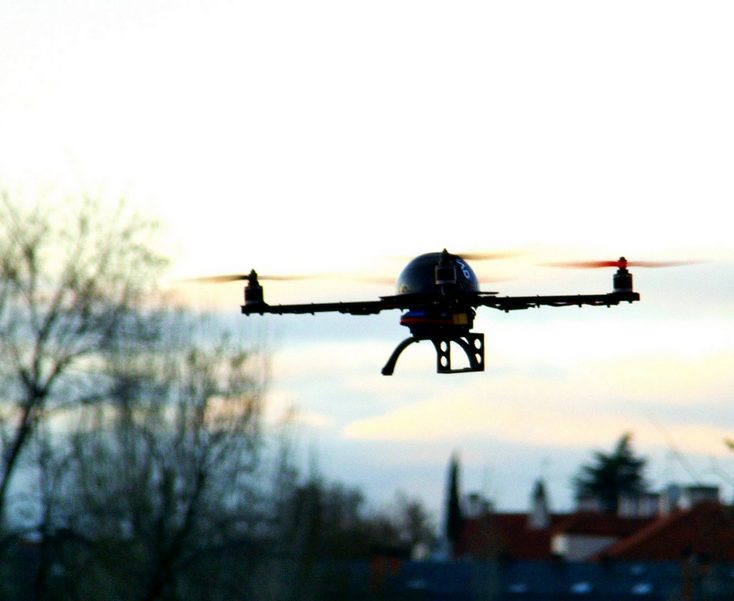 On Feb. 15, 2015, the Federal Aviation Administration (FAA) released proposed regulations for the use of drones. The proposal requires UAS (Unmanned Aircraft System(s)) pilots to be at least 17 years old, to take an initial aeronautical knowledge test followed by a new test every 24 months, and to pass a TSA screening. The FAA also aims to regulate the speed, timing, and height of drone flights. UAS must avoid spectators, fly no faster than 100 miles per hour and no higher than 500 feet, and fly only during the day. Perhaps most importantly, the drones must remain within sight of the pilots at all times. These rules are for UAS of less than 50 pounds. The proposal discusses the possibility of a more flexible law for UAS of less than 4.4 pounds. The FAA is supposed to finalize the rules by September 2015, but it seems unlikely that the agency will meet the deadline. The FAA proposal is open for comments for 60 days before it moves forward.
 I’m excited to announce that Professor Anne Klinefelter and I received an award from the