Archive | First Amendment

UNC media law student publishes in Communication Law and Policy

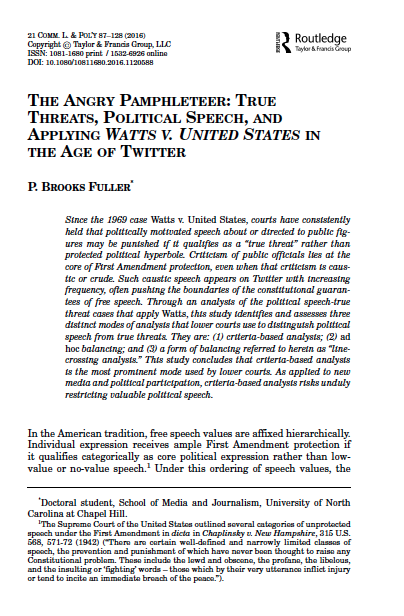
Screen Shot 2016-01-31 at 12.18.42 PMUNC media law student Brooks Fuller recently had an article published in Communication Law and Policy. The article is “The Angry Pamphleteer: True Threats, Political Speech, and Applying Watts v. United States in the Age of Twitter.”

In light of the rise of “caustic” political speech on new media, the article examines modes of analysis that lower courts use when distinguishing political speech from true threats. The article finds that the primary analysis used by lower courts is a criteria-based analysis. It argues that this type of analysis risks unduly restricting political speech when applied to new media such as Twitter.  The article says, in part, “Identifying protected political speech requires careful balancing of the myriad speech interests raised when an individual chooses to vent political frustrations cathartically on a public medium such as Twitter. Careful contextual balancing avoids restricting the analytical focus to rote criteria.”

This is the citation for the article: P. Brooks Fuller, The Angry Pamphleteer: True Threats, Political Speech, and Applying Watts v. United States in the Age of Twitter, 21 Comm. L. & Pol’y 87 (2016).

Brooks is a third year media law PhD student.

Congratulations, Brooks!

0

Required Drone Registration Coming

Required Drone Registration

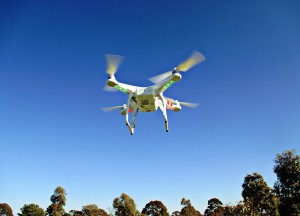
Drone owners will be required to register their aircraft with the Federal Aviation Administration (FAA) soon. The FAA’s drone registration task force is expected to finalize its recommendations for drone registration guidelines by Friday, November 20, 2015.

The FAA announced the creation of the Unmanned Aircraft Systems (UAS) Registration Task Force on October 29, and said its goal was to establish recommended guidelines for drone registration. During the meetings, members discussed “how an operator might prove a UAS is registered, how the aircraft would be marked, and how to use the registration process to encourage or require UAS operators to become educated on basic safety rules,” according to a news update on the FAA’s website.

The task force’s last meeting occurred on November 5 and they will finalize their recommendations for FAA Administrator Michael Huerta to review by November 20.

Drone safety rules are increasingly disregarded and officials have trouble tracking down rule-breakers under the current system. Pilots have reported more than 650 sightings of drones from the start of the year to August 9, despite it being illegal and dangerous to fly drones by planes or helicopters.

For more on this subject, check out these articles:

1

First Amendment Day Events

FirstAmendmentDay

Carolina’s seventh-annual First Amendment Day celebration will be held on Tuesday, Sept. 29, 2015. You can view the full schedule of events here. 

Organized by the UNC Center for Media Law and Policy, this year’s festivities will include a banned-book reading by Chancellor Carol Folt; a First Amendment trivia contest; and a keynote address by Danielle Keats Citron, a legal scholar who has written extensively about hate crimes in cyberspace — especially those targeting women. There also will be a panel discussion at which UNC student journalists will discuss their problems covering UNC athletics. Steve Kirschner, the senior associate athletic director for communications at UNC, will be on the panel to respond. At a second panel discussion, students and others will discuss the symbols of the South that have created a firestorm of opinion about their meaning and their impact on students. The panelists will explore the law regarding these controversial Southern symbols and the activism surrounding symbols of the South.

Generous funding for the day’s events is provided by Time Warner Cable.

0

Media Law Center Welcomes Prof. Papandrea and a new Ph.D. Student

A senior scholar and a new Ph.D. student have joined UNC’s community of media law scholars.  The Center for Media Law and Policy is happy to welcome Professor Mary-Rose Papandrea and Ph.D. student Shao Chengyuan.
ProfPapandrea3Mary-Rose Papandrea came to the UNC School of Law this summer from Boston College Law School. Her teaching and research interests include constitutional law, media law, torts, civil procedure, and national security and civil liberties.

After graduating from Yale College and the University of Chicago Law School, Professor Papandrea clerked for U.S. Supreme Court Justice David H. Souter as well as Hon. Douglas H. Ginsburg of the U.S. Court of Appeals for the D.C. Circuit and Hon. John G. Koeltl of the U.S. District Court for the Southern District of New York. She then worked as an associate at Williams & Connolly LLP in Washington, D.C., where she specialized in First Amendment and media law litigation. In addition to spending over a decade at Boston College Law School, Professor Papandrea taught as a visiting professor at the University of Connecticut School of Law, Fordham Law School, Wake Forest Law School, and the University of Paris (Nanterre).

Co-author of the casebook Media and the Law (LexisNexis, 2nd ed. 2014) (with Lee Levine, David Ardia & Dale Cohen), Professor Papandrea has written extensively about government secrecy and national security leaks, the reporter’s privilege, student speech rights, the First Amendment rights of public employees, and the U.S. Supreme Court and technology.

Professor Papandrea has also served as the chair of the American Association of Law School’s Mass Media Law and National Security Law sections and remains on the executive committee of both sections. She is currently a member of the editorial board for the Journal of National Security Law & Policy. In addition, she has served on the board of directors for the American Civil Liberties Union of Massachusetts.

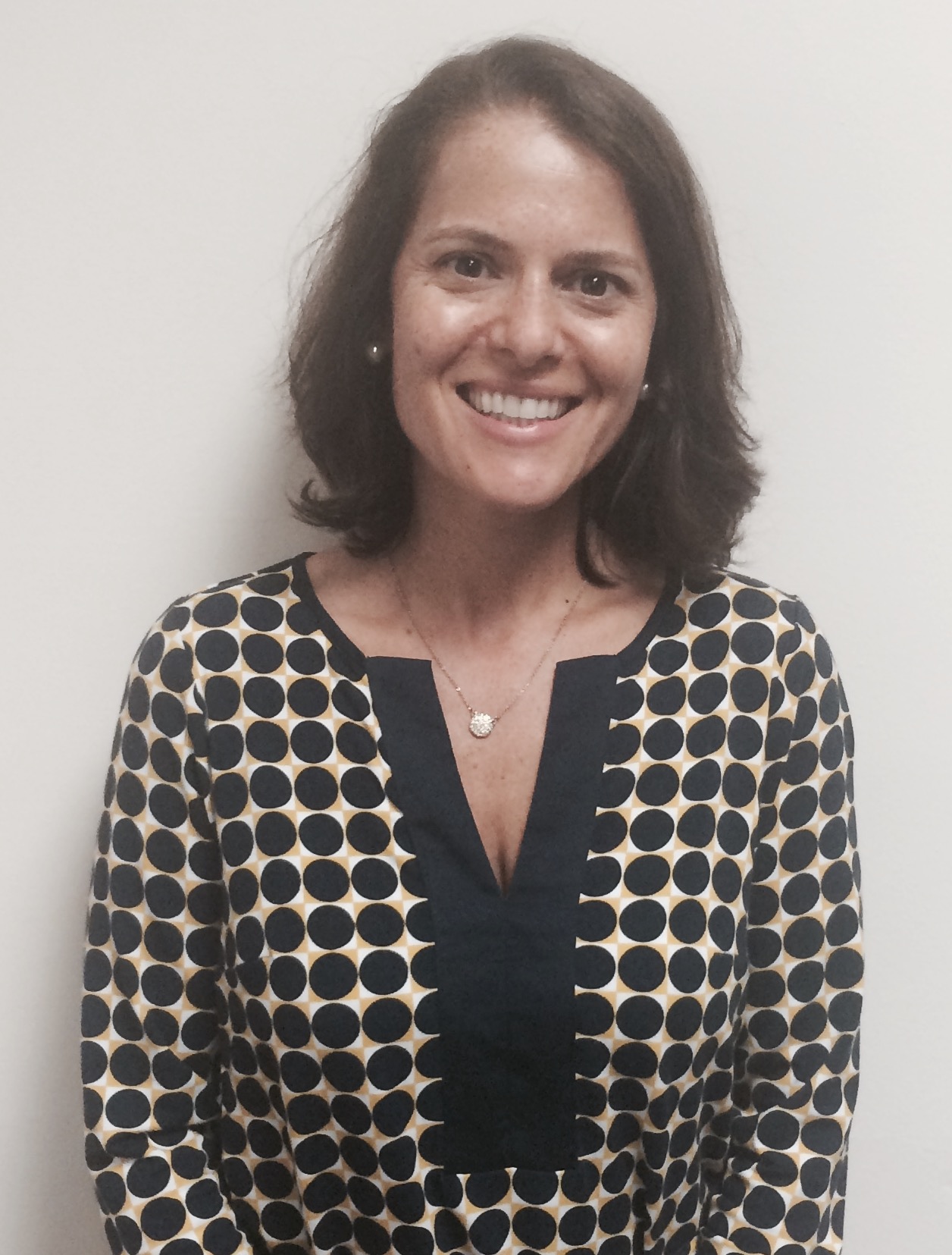
ShaoShao Chengyuan came to the UNC School of Media and Journalism from Beijing, China. She earned a master’s in communication from Beijing Foreign Studies University and a bachelor’s in English from China Agricultural University in Beijing. She has been studying media law issues in China, specifically new media-related legislation and the legal boundaries of online free speech. She also has worked as a television news producer for Spanish TV Etib’s Beijing Bureau. Her research interests include Internet policy and governance, freedom of expression, online anonymity, and government information publicity. She is planning to conduct comparative media law research.



0

United States Supreme Court decides Facebook true threats case

The Supreme Court has issued its long-awaited opinion in Elonis v. United States, the Facebook threats case. In a narrow opinion by Chief Justice John Roberts, the Court overturned the conviction of Anthony Elonis, who allegedly threatened his ex-wife and federal law enforcement agents through rap lyrics he posted to his Facebook page under personal hip-hop moniker “Tone Dougie.”

The government closed oral argument by emphasizing that “what [Elonis] thinks doesn’t matter.” The Supreme Court, on the other hand, said it does. Specifically, the Court held that in order to successfully prosecute a defendant under the federal interstate threats statute, 18 U.S.C. 875(c), the government must show that the defendant acted with a criminally culpable mental state beyond mere negligence. The Court rejected the notion that a criminal threats conviction could rest solely on proof that a hypothetical reasonable person would find that a statement amounted to a true threat.

The trouble with the opinion issued by the Court in Elonis — and with the current landscape of federal law on true threats — is that it remains unclear exactly what state of mind the law requires. The majority in Elonis expressly declined to decide whether recklessness is sufficient. Furthermore, section 18 U.S.C. 875(c) does not explicitly set forth a requisite mental state, so Elonis could trigger a legislative response by Congress. Lawmakers could shore up the language in 875(c) and explicitly define the mental state greater required for criminal threats convictions. The ball is in Capitol Hill’s court.

So what about the First Amendment?

The Court declined to address the First Amendment argument made by Elonis at trial and on appeal — that the Constitution requires the government to prove that the defendant specifically intended to threaten an identifiable person or group of persons when he communicated the threat. Justices Alito and Thomas chastised the majority for avoiding the constitutional question, but we saw this coming. When the Court granted certiorari in Elonis, it asked the parties to brief and argue the statutory interpretation question even though Elonis appealed solely on First Amendment grounds.

If there is anything we can infer about free speech jurisprudence from the Supreme Court’s holding in Elonis, it is that courts must look beyond the mere content of the purported threat and scrutinize the defendant’s behaviors for indicia of a criminal state of mind. Under Elonis, the hypothetical reasonable person may no longer be the sole arbiter of criminal speech determinations under 875(c). This standard provides some additional breathing space for threatening speech and heightens the importance of context. Nevertheless, artists, lawyers, and scholars are left wondering whether the First Amendment protects violence-laden speech uttered recklessly and without regard for foreseeable emotional and psychological harms to victims.

Brooks Fuller is a 3rd-Year Ph.D. student in the UNC School of Journalism and Mass Communication.

0