Author Archive | David Ardia

Public Interest Summer Grants for UNC Law and Graduate Students

summer-job-pictureEach year, the UNC School of Law provides grants to law students taking unpaid or low-paying summer public interest jobs. Funding for these grants comes from several sources, including the Carolina Public Interest Law Organization (CPILO), private funds given by generous donors, law school funds allocated by the Dean, and student organizations that fundraise to support students working in a particular area of interest.  In 2015, the grant program awarded more than $300,000 to 105 students. 
For the fifth year in a row, the Center for Media Law and Policy is contributing funds to assist students (both UNC law and graduate students) who have a summer job in the field of media law or media policy.  Wait, you don’t have a summer job yet?  Head over to our media law and policy Jobs Center, where you will find dozens of summer and post-graduate employment opportunities.  Still not sure what you want to do for the summer?  You can read about the summer experiences of your fellow students on the Center’s blog.

Requirements and Information on How to Apply for a Summer Grant

For UNC law students interested in both a Center grant and law school grant, the deadline for applying is March 13, 2016.  The application process and general requirements for these funds is the same as for the law school’s Summer Public Interest Grant.  Simply check the box on the general application for “Media Law or Policy” under the heading “Substantive Areas Your Summer Employment Will Involve” and you will be automatically considered for Center funds in addition to the law school grant.  If you have already filled out an application, just log back in and check the box for “Media Law or Policy”; you can make changes to your application until the application deadline.

For UNC graduate students and law students who are not eligible for law school funds, the deadline for applying for a summer grant is March 20, 2016.  Please download the application form and send it directly to us at medialaw [at] unc.edu along with the other supporting material described below.  You will be notified of a decision in early April.

You must have a job offer from one of the following types of organizations to be eligible for law school funds: a nonprofit organization (an organization that is described in section 501(c) of the Internal Revenue Code of 1986 and exempt from taxation under section 501(a) of the Code), a legal aid office, a state or federal government agency, a public defender office, or a district attorney office. If are a UNC graduate student or law student who is not eligible for law school funds, your employer does not need to meet the requirements described directly above.

Applications will be evaluated based on (a) your demonstrated commitment to public service and to working in the areas of media law or policy and (b) the quality of your essays (each essay must not be more than 500 words).

Required documents include:

  1. Resume (without grade information)
  2. Offer letter from your employer
  3. Essays (no more than 500 words each) *

* Essay questions:

  • Essay #1: Describe your work responsibilities and how they relate to media law or media policy.
  • Essay #2: Describe your commitment to public service. How have your past interests and work experiences contributed to your proposed summer internship responsibilities?
  • Essay #3: How do you see this summer work experience contributing to your long-term career goals?

Be sure to check out these Tips for Writing a Strong Grant Application.

0

Privacy and Court Records: Online Access and the Loss of Practical Obscurity

CourtRecrodsI’m excited to announce that Professor Anne Klinefelter and I received an award from the Berkeley Center for Law & Technology and Microsoft Corp. to study the extent of private and other sensitive information in court records.  The $43,000 award will go to the Center for Media Law and Policy and the Kathrine R. Everett Law Library at the UNC School of Law to support a team of researchers who will sample and code several hundred briefs and other filings from the North Carolina Supreme Court.
The United States has a long history of providing public trials and open access to court records, both of which are essential if the public is to have faith in the fairness of our courts and justice system.  Over the past two decades, courts across the country have been moving quickly to digitize their records and make them available online. Some courts are doing this work themselves, while others are relying on third parties, such as libraries and other archives, to make public access possible. All, however, are dealing with one central and unavoidable issue: privacy.

Court records contain a number of types of information that could be characterized as private, ranging from social security numbers to the names of minor children involved in sexual abuse. Little work has been done, however, to study how often this information appears in judicial records and the context in which it appears. The lack of empirical data hamstrings court personnel and other archivists who are attempting to balance privacy interests with the public’s right of access, as well as scholars looking to adapt privacy law and First Amendment doctrines to deal with the flood of public records going online.

This research will provide a first-of-its-kind empirical study of the frequency of sensitive and private information in court records.  Although we are hopeful that our study will be valuable to courts and other archivists, we do not plan to recommend that any specific information in these records be redacted. Instead, our aim is to catalog the kinds of sensitive information that are in these records and to examine the context in which the various types of private information appear.  This will help policymakers and judges better evaluate the potential harm to privacy interests that might arise from the disclosure of private information in court briefs and related records. An examination of term frequency and any discoveries that certain terms are likely to appear when others also appear, may also inform some normative arguments about the “harmfulness” of online access to court records.

This study will also add much needed detail to the term “private information” as it applies in the context of judicial records. Based on a review of the laws that apply to court records as well as other privacy laws and scholarship, we have identified more than 139 types of sensitive or private information that may exist in these records. It is very unlikely that all of these information types appear with equal frequency. Frequency of appearance may be correlated with case type (e.g., civil vs. criminal), document type (e.g., brief vs. appendix) or time period. This study will allow us to assess, for example, whether criminal cases tend to raise different privacy concerns from civil cases.

Our project was one of six proposals to receive awards from Berkeley and Microsoft. You can read the UNC School of Law’s announcement of the award here.

We will present the results of this research at the 2015 Berkeley Technology Law Journal Spring Symposium, “The Privacy, Security, Human Rights and Civil Rights Implications of Releasing Government Datasets,” on April 17.  Look for more posts about our study over the next few months.

0

UNC’s Constitution Day, Featuring David Medine

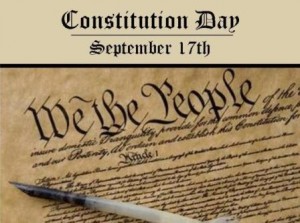
ConstitutionDayOver the past few years, the UNC School of Law has served as host of UNC-Chapel Hill’s campus-wide Constitution Day celebration. This year the speaker will be David Medine, chairman of the U.S. Privacy and Civil Liberties Oversight Board, who will speak on the topic of “Providing for the Common Defense without Compromising Privacy and Civil Liberties.”   The talk will take place on September 17, 2014 at noon in the law school’s rotunda.

David Medine has served as chairman of the Privacy and Civil Liberties Oversight Board since May 2013. Previously he was an attorney fellow for the Security and Exchange Commission and a special counsel at the Consumer Financial Protection Bureau. From 2002 to 2012, he was a partner in the law firm WilmerHale, where his practice focused on privacy and data security, having previously served as a Senior Advisor to the White House National Economic Council from 2000 to 2001. From 1992 to 2000, Mr. Medine was associate director for financial practices at the Federal Trade Commission (FTC) where, in addition to enforcing financial privacy laws, he took the lead on Internet privacy, chaired a federal advisory committee on privacy issues, and was part of the team that negotiated a privacy safe harbor agreement with the European Union. Before joining the FTC, he taught at the Indiana University (Bloomington) School of Law and the George Washington University School of Law.

The event is open to the public.  More info is available here.

0

Call for Papers – First Amendment Networks: Issues in Net Neutrality

FALROn October 24, 2014, we will be partnering with the First Amendment Law Review to help host their annual symposium, which will be focused on network neutrality and the First Amendment.  We’ll post more information about the symposium in the next few weeks, but if you are a scholar who writes in this area, you may be interested in submitting a paper to the First Amendment Law Review (note: the deadline is October 13).  Here is their call for papers:

The First Amendment Law Review at the University of North Carolina School of Law is delighted to announce a Call for Papers for its Symposium Edition, First Amendment Networks: Issues in Net Neutrality.

The Symposium Edition seeks papers covering the breadth of topics at the intersection of the First Amendment and the current state of network neutrality regulation. The Symposium Edition, in conjunction with the fall symposium at the University of North Carolina’s Chapel Hill campus, hopes to bring a variety of perspectives from multiple disciplines to bear on the First Amendment freedoms implicated in the net neutrality debate. The Symposium Edition seeks papers primarily with a legal focus, but is interested in outstanding papers also from economics, business, and government which can provide insights into this important discussion. Submissions should be delivered via email to falr@unc.edu by October 13 to be considered for publication.

***

The First Amendment Law Review (FALR) is a student-edited legal journal that seeks to promote and protect the rights and freedoms guaranteed by the First Amendment through publishing scholarly writings on, and promoting discussion of, issues related to the First Amendment to the Constitution of the United States.

FALR publishes professional and student articles for the benefit of scholars and practitioners. Professional contributions are composed of scholarly articles, symposium papers, and novel, interesting essays on a variety of issues touching the First Amendment. Student contributions are composed of scholarly examinations of discrete First Amendment topics and recent developments in First Amendment law.

As the only legal journal in the country dedicated to the First Amendment, FALR seeks to provide as broad and inclusive a forum as possible for the discussion of First Amendment issues. To that end, FALR does not apply any strict page or footnote requirements to professional papers, but considers each submission on a case-by-case basis. Substantial weight will be given to those submissions that present a subject in traditional legal journal format: introduction, background, legal analysis, legal argument, and conclusion. While strong preference is given to professional pieces, the editorial board will consider student-written articles.

All submissions should be in Microsoft Word format, 12-point font, preferably Times New Roman. The text itself should be double-spaced; footnotes should be single-spaced. FALR uses The Bluebook: A Uniform System of Citation. All submissions should comply with The Bluebook. For more information on the journal, please visit http://www.law.unc.edu/journals/falr/

0

Summer Public Interest Grants for UNC Law and Graduate Students

summer-job-pictureEach year, the UNC School of Law provides grants to law students taking unpaid or low-paying summer public interest jobs. Funding for these grants comes from several sources, including the Carolina Public Interest Law Organization (CPILO), private funds given by generous donors, law school funds allocated by the Dean, and student organizations that fundraise to support students working in a particular area of interest.  In 2013, the grant program awarded more than $292,000 to 85 students. In 2014, the award amount will be $500,000, which could benefit more than 160 students.

For the second year in a row, the Center for Media Law and Policy is contributing funds to assist students (both UNC law and graduate students) who have a summer job in the field of media law or media policy.  Wait, you don’t have a summer job yet?  Head over to our media law and policy Jobs Center, where you will find dozens of summer and post-graduate employment opportunities.  Still not sure what you want to do for the summer?  You can read about the summer experiences of your fellow students on the Center’s blog.

Requirements and Information on How to Apply for a Summer Grant

For UNC law students, the deadline for applying for a summer grant is March 20, 2014 at 5:00 p.m.  The application process (and general requirements) for these funds is the same as for the law school’s Summer Public Interest Grant.  Simply check the box on the general application for “Media Law or Policy” under the heading “Substantive Areas Your Summer Employment Will Involve” and you will be automatically considered for these funds.  If you have already filled out an application, just log back in and check the box for “Media Law or Policy”; you can make changes to your application until the application deadline.

For UNC graduate students, the deadline for applying for a summer grant is March 27, 2014 at 5:00 p.m.  Please download the application form and send it directly to us at medialaw [at] unc.edu along with the other supporting material described below.  You will be notified of a decision in early April.

NOTE: You must have a job offer from one of the following types of organizations to be eligible: a nonprofit organization (an organization that is described in section 501(c) of the Internal Revenue Code of 1986 and exempt from taxation under section 501(a) of the Code), a legal aid office, a state or federal government agency, a public defender office, or a district attorney office.

Applications will be evaluated based on (a) your demonstrated commitment to public service and (b) the quality of your essays (each essay must not be more than 500 words).

Required documents include:

  1. Resume (without grade information)
  2. Offer letter from your employer
  3. Essays (no more than 500 words each) *

* Essay questions:

  • Essay #1: Describe your work responsibilities and how they relate to media law or media policy.
  • Essay #2: Describe your commitment to public service. How have your past interests and work experiences contributed to your proposed summer internship responsibilities?
  • Essay #3: How do you see this summer work experience contributing to your long-term career goals?

Be sure to check out these Tips for Writing a Strong Grant Application.

0