Archive | First Amendment

Sealed Justice: Federal Courts’ Inconsistent Record-Sealing Rules and Their Impact on Judicial Transparency

My article titled “Sealed Justice: Federal Courts’ Inconsistent Record-Sealing Rules and Their Impact on Judicial Transparency” recently came out in the Journal of Free Speech Law. In the article I argue that federal district courts are doing a poor job of  protecting the public’s right of access to court records. Despite the longstanding presumption that court records are open for public inspection, parties frequently attempt to “seal” documents in order to hide them from public view. Empirical research reveals that the sealing of court records is extensive and increasing. This project is the first to comprehensively examine whether federal district courts provide clear and consistent local rules for sealing court records in civil and criminal cases. It also evaluates whether these local rules align with established Supreme Court and circuit court precedent concerning the public’s right of access to judicial records.

Here is the full abstract:

Public access to court records is a cornerstone of democratic governance, enabling public oversight of the judiciary and fostering confidence in the rule of law. Despite a strong presumption in favor of openness under both the First Amendment and common law, the sealing of federal court records has become widespread, often with minimal judicial scrutiny. Recent investigations have revealed that excessive court secrecy shields government and corporate misconduct, conceals vital public-safety information, and erodes public confidence in the courts.

This Article presents the first comprehensive analysis of the local rules governing sealing in all 94 federal districts, reviewing more than 700 provisions in both civil and criminal rules. The findings are concerning: Nearly half of all districts lack general sealing rules, many fail to reference the controlling legal standard, and basic procedural safeguards—such as public notice, consideration of alternatives to sealing, and case-specific identification of harms—are frequently absent. These deficiencies have created a patchwork of inconsistent, often toothless rules that enable secrecy to spread largely unchecked.

Without changes to federal rules, court-ordered secrecy will continue to erode public trust and obscure the work of the federal courts. This Article proposes three core principles to guide this reform. First, substantive clarity: Every rule governing sealing should expressly affirm the presumption of public access and incorporate, at a minimum, the common law’s requirements for sealing. Second, procedural rigor: Rules should require public notice of sealing requests, an opportunity for objections, identification of specific harms, consideration of less-restrictive alternatives, and mechanisms for periodic review and unsealing. Third, administrative efficiency: Rules should require parties to limit the frequency and narrow the scope of their sealing re-quests, explore redaction as an alternative, and certify their efforts to minimize the need for sealing.

You can download the article from SSRN or from the Journal of Free Speech Law.
1

Second Annual Aspiring Free Speech Scholars Workshop

Second Annual Aspiring Free Speech Scholars Workshop
jointly sponsored by the Sandra Day O’Connor College of Law (ASU)
and the Hoover Institution (Stanford University)

Posted on behalf of Eugene Volokh and James Weinstein:

Are you a law student, judicial law clerk, lawyer, or beginning academic hoping to publish a journal article on free speech law? Would you like the opportunity to get advice about your draft from leading free speech scholars?

If so, send us your draft by Sunday, August 16, 2026. (This should still be a draft article, not an article that’s already published or expected to be published within six months.) We plan to select the submissions that we think are particularly promising, and invite their authors to a workshop where they can present their papers and get helpful feedback on them. The workshop will be Saturday, October 24, 2026 (with dinner the night before) at the Sandra Day O’Connor College of Law in Phoenix, and we will inform the selected authors by Tuesday, September 8, 2026.

We have funds to pay for transportation and lodging for the selected authors’ trips. Eligibility is limited to people who have so far published three or fewer law-related journal articles.

We also plan to officially recognize zero to three of the top articles among those we review. If the authors wish, they can also have their articles reviewed for publication in the Journal of Free Speech Law (http://JournalOfFreeSpeechLaw.org), presumably after they revise the articles in light of the workshop feedback.

If you’re interested, please submit your draft at http://tinyurl.com/aspiring-free-speech (Google logon required). Please single-space, and format the article nicely, so we can more easily read it.

Please do not include your name or law school affiliation in the document or document filename, and please do not include an author’s note thanking your advisors and others. Please make your filename be the title of your article (or some recognizable subset of the article title). We want to review the article drafts without knowing the authors’ identities.

If you have questions, please check http://tinyurl.com/aspiring-free-speech-faq; if your question isn’t answered there, please e-mail volokh@stanford.edu.

Many thanks to the Stanton Foundation for its generous support.

* * *

James Weinstein, Dan Cracchiolo Chair in Constitutional Law and Professor of Law, Sandra Day O’Connor College of Law, Arizona State University

Eugene Volokh, Thomas M. Siebel Senior Fellow, Hoover Institution (Stanford University), and Gary T. Schwartz Distinguished Professor of Law Emeritus, UCLA School of Law

0

2025 First Amendment Day

The UNC Center for Media Law and Policy will celebrate its sixteenth annual First Amendment Day on Wednesday, October 8, 2025.  This campus-wide, daylong series of events is designed to both celebrate the First Amendment and explore its role in the lives of Carolina students. As always, First Amendment Day is observed during National Banned Books Week.
Join us for CLE credits (Campus Life Experience), food, and thought-provoking discussions.

Here are some highlights:

Bring your students and your questions. You won’t find a smarter group of folks talking about these critical issues!

0

New Article on Popular Sovereignty and a Right to Know About the Government

My recent article on Popular Sovereignty and a Right to Know About the Government just came out in the Arizona Law Review. In the article I argue that a right to know is not only implied by the First Amendment but is fundamental to the Constitution’s system of checks and balances and is rooted in the principle of popular sovereignty. The Framers’ commitment to self-government requires that citizens have access to information about their government if they are to exercise their sovereign authority over the government. Recognizing a right to know as a constitutional imperative, rooted in the people’s sovereign authority, establishes a durable foundation for limited government.  Here is the full abstract:

Imagine that a future U.S. President, upset about negative press coverage and plummeting approval ratings, issues an executive order instructing all federal agencies to henceforth provide no public access to executive branch records and meetings. Imagine further that the President’s party controls both chambers of Congress, which rescinds all statutory disclosure obligations imposed on the executive branch, including the Freedom of Information Act (FOIA), Government in the Sunshine Act, and Presidential Records Act. Is the public’s ability to understand the actions of government solely a matter for their elected representatives to decide? Disturbingly, many courts and scholars seem to think so.

If the government attempts to keep its citizens in the dark, or even actively misleads them, how can this not strike at the very heart of the Constitution? I argue in this Article that a right to know about the government is fundamental to the Constitution’s system of checks and balances. While past scholarship has largely grounded the right to know in the First Amendment, this Article advances a more foundational claim: the Framers’ unwavering commitment to popular sovereignty demands that the people have a right to know about their government. Recognizing a right to know as a constitutional imperative, rooted in the people’s sovereign authority, establishes a durable foundation for limited government—one that ensures that citizens can hold their leaders accountable and fully exercise their role in self-government.

Implementing a right to know about the government will present many challenges. Fortunately, we can draw guidance from the Supreme Court’s cases applying a public right of access to the courts, and we have decades of experience with open government statutes such as FOIA and the Sunshine Act. Building on this foundation, I lay out three core principles that should guide the development of a right to know about the government. First, a right to know should be limited in scope and extend only so far as is necessary to fulfill the needs of democratic self-government. Second, even when a right to know applies, it should yield when countervailing interests are sufficiently weighty. Third, the government must have leeway in designing access policies and procedures that account for the practical realities of providing public access.

You can download the article from SSRN.

0

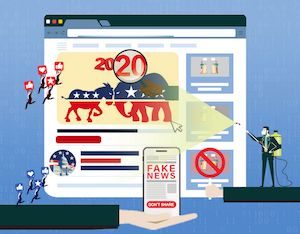
First Amendment Limits on State Laws Targeting Election Misinformation

At long last, the article Evan Ringel and I wrote on First Amendment Limits on State Laws Targeting Election Misinformation has finally been published in the First Amendment Law Review.  The piece expands on a whitepaper we wrote in 2021 that cataloged state efforts to regulate election-related speech (available on SSRN).

I’ve pasted the abstract below, but if you want to read it in bite size chunks, I will be posting a series of excerpts at the Volokh Conspiracy this week.  The first post just went up today!

Here is the abstract:

The last two presidential election cycles have brought increased attention to the extent of misinformation – and outright lies – peddled by political candidates, their surrogates, and others who seek to influence election outcomes. Given the ubiquity of this speech, especially online, one might assume that there are no laws against lying in politics. It turns out that the opposite is true. Although the federal government has largely stayed out of regulating the content of election-related speech, the states have been surprisingly active in passing laws that prohibit false statements associated with elections.

Prompted by concern about the impact of misinformation on the American electorate, we set out to assess the extent to which existing state and federal laws limit election misinformation and the prospect that these laws will survive First Amendment scrutiny. In doing so, we reviewed more than 125 state statutes that regulate the content of election-related speech, ranging from statutes that prohibit false and misleading factual statements about candidates to laws that indirectly regulate election-related speech by prohibiting fraud and intimidation concerning elections.

What we found is that state statutes regulating election misinformation vary widely in the types of speech they target and the level of fault they require, with many statutes suffering from serious constitutional deficiencies. Statutes that target defamatory speech or speech that harms the election process, is fraudulent, or that intimidates voters are likely to be permissible, while statutes that target other types of speech that have not traditionally been subject to government restriction, such as statutes that target merely derogatory speech, will face an uphill battle in demonstrating that they are constitutional. Furthermore, statutes that impose liability without regard to the speaker’s knowledge of falsity or intent to interfere with an election are especially problematic.

Political speech has long been viewed as residing at the core of the First Amendment’s protections for speech. Yet it has become increasingly clear that lies and other forms of misinformation associated with elections are corrosive to democracy. The challenge, of course, is in developing regulatory regimes that advance the interest in free and fair elections while at the same time ensuring that debate on public issues remains uninhibited, robust, and wide-open. This is no easy task. Regardless of whether individual statutes survive First Amendment scrutiny, it is useful to understand the breadth and depth of state attempts to deal with lies, misinformation, intimidation, and fraud in elections. As we point out, any legislative approach to combatting election misinformation must be part of a broader societal effort to reduce the prevalence of misinformation generally and to mitigate the harms that such speech creates.

You can read the full version of the article here.

0